 FreshFynds
Why are my potted lemons so small? What I found on my 12-masi lemon
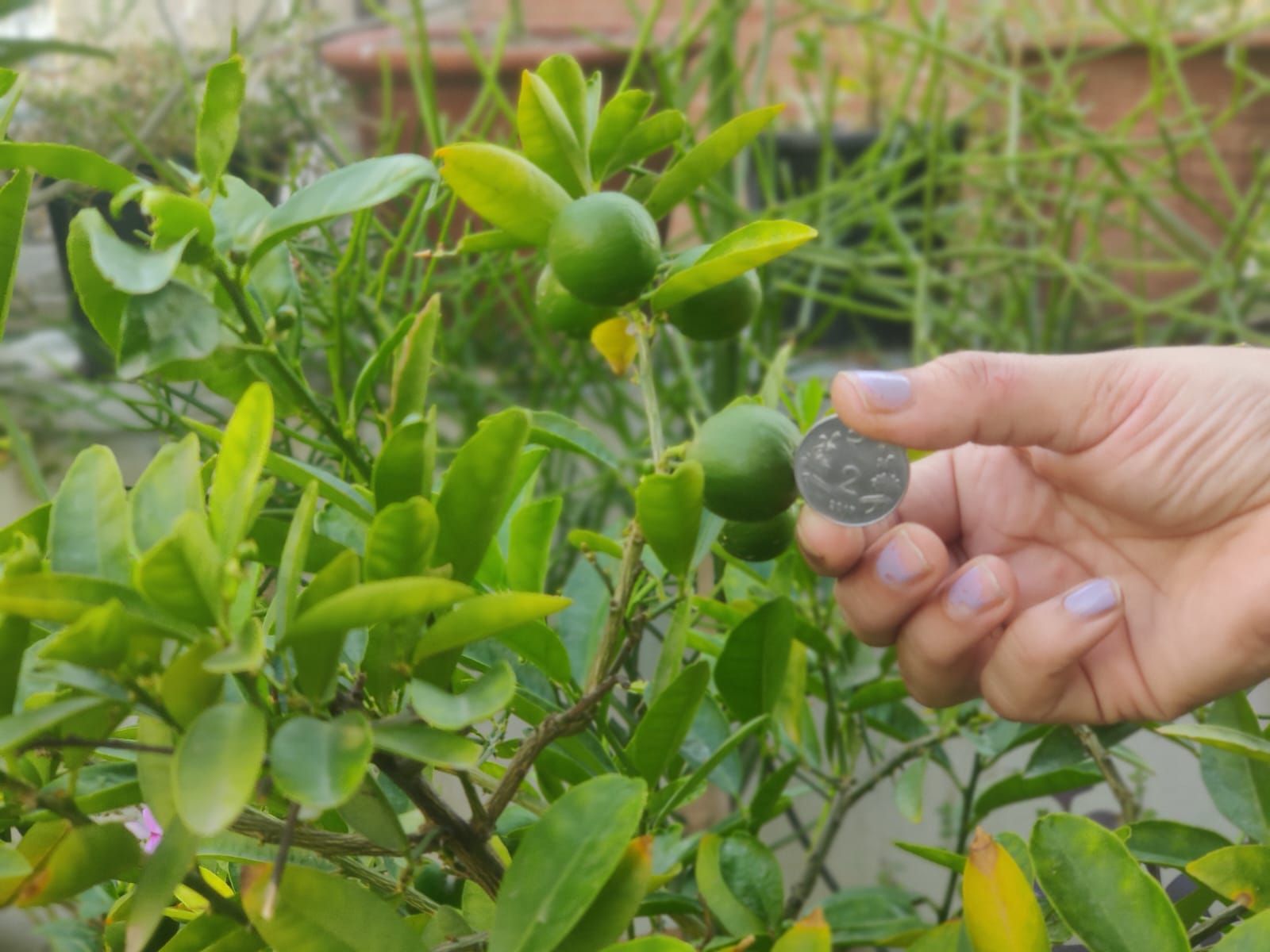
Around 60 lemons, most barely bigger than a ₹2 coin. Here's what really keeps potted lemons small in Indian homes, and my season-by-season plan to fix it.
Published · Updated
This guide may contain affiliate links.Here's how that works.
My 12-masi lemon plant looks like a success story. In its first year in a 16-inch pot it gave me around 60 lemons, and this year it’s carrying 50–60 again. There’s just one problem: almost every lemon is about the size of a ₹2 coin.
If your potted lemon is doing the same, you’ve probably been told to add Epsom salt, sugar water or banana peels. I tried the internet’s advice before. This time I looked properly at my own plant, and found that small lemons are rarely about one missing “magic” ingredient. They’re the result of several things going wrong together.
Quick answer: Potted lemons usually stay small because the plant is carrying too many fruits for its size, isn’t getting balanced food (especially potassium and micronutrients), and is growing in soil that dries and waters unevenly. Sometimes the variety is simply a small-fruited lime. The fix is a season-by-season plan, not a single hack.
My plant: the honest facts
| Detail | My lemon plant |
|---|---|
| Type | Sold as “12-masi” (baramasi) lemon, from a nursery |
| Age | Second year in my care |
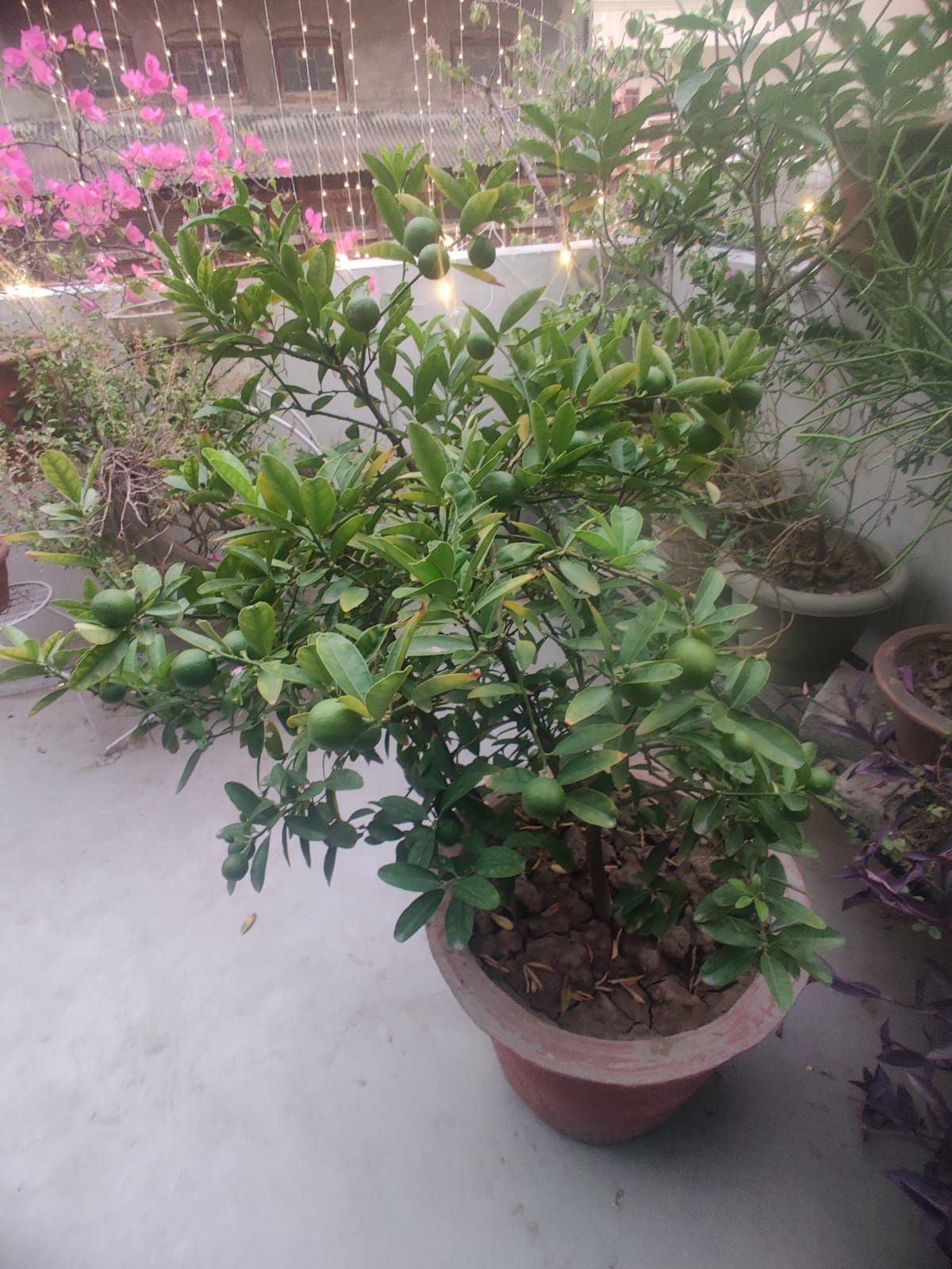
| Pot | 16-inch pot, heavy garden-type soil |
| Sun | 7–10 hours of direct sun (east-facing terrace, Punjab) |
| Watering | Daily in summer; from October, when the top soil dries |
| Feeding | Urea once, about 10 months ago. Vermicompost once, about 2 months ago. Nothing else. |
| Fruit | 50–60 lemons, mostly in September–October; only 1–2 the rest of the year |
| Size | Round, roughly 2.5–3 cm across, about the size of a ₹2 coin |
Looking at that table now, the reasons are almost obvious. Here they are one by one.
Cause 1: Far too many fruits for a young plant
This is the one nobody online talks about. A lemon plant has a limited amount of energy, set by its leaves, roots and pot size. Every fruit it carries takes a share. When a young plant in a 16-inch pot tries to grow 60 fruits at once, each fruit gets only a small share, so all of them stay small.
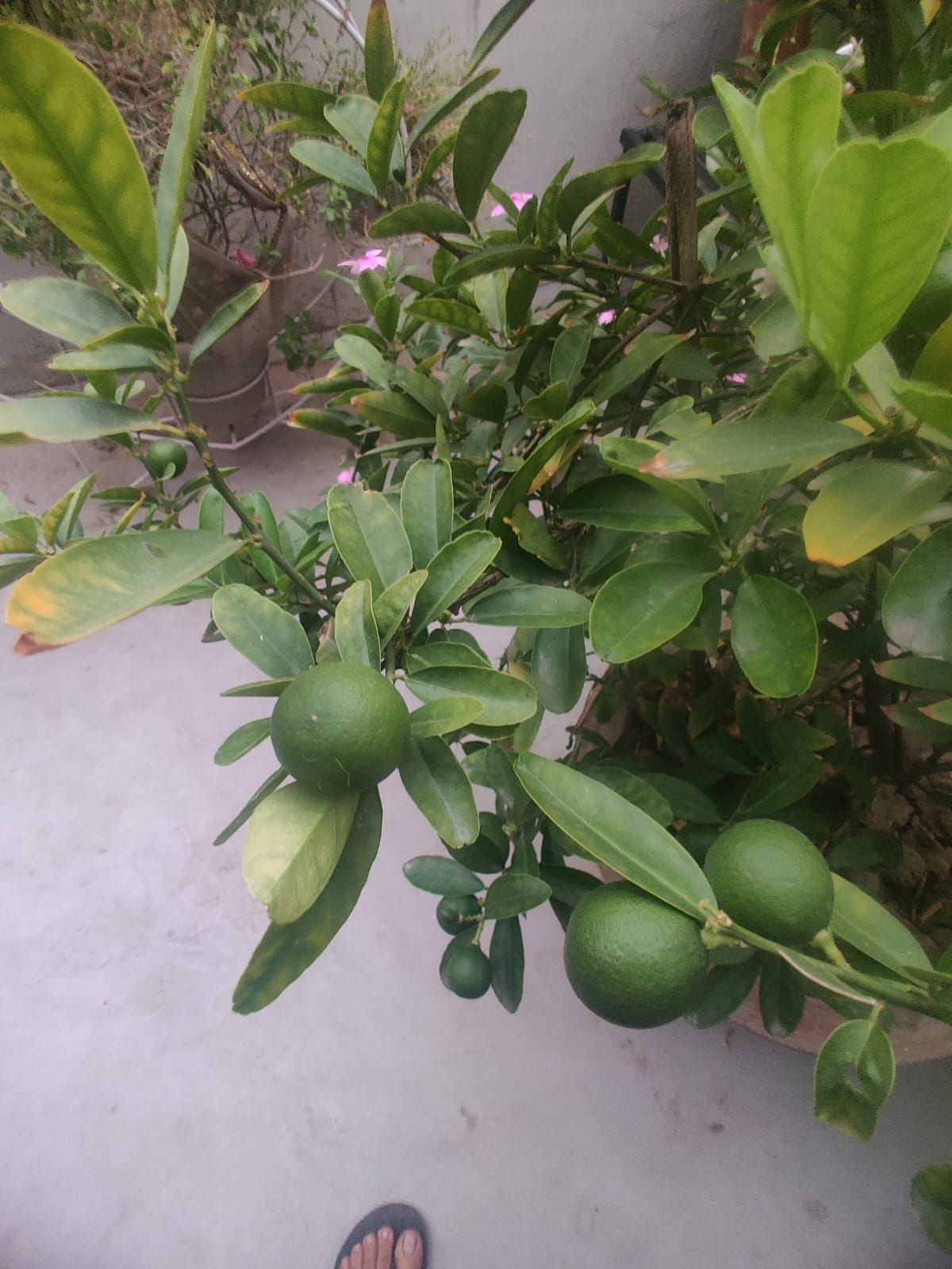
You can see it in my photos: lemons growing in clusters of two and three on the same short branch, all competing. Experienced citrus growers often thin young trees, removing some fruit early (when it’s marble-sized) so the plant puts its energy into fewer, bigger fruits and stronger growth. Leaving every fruit feels like a bigger harvest, but you end up with more small, juiceless lemons and a tired plant.
Cause 2: Almost no balanced food
In nearly a year, my plant got urea once and vermicompost once, while trying to grow 60 fruits.
- Urea is almost pure nitrogen. Nitrogen mainly grows leaves and shoots. It does very little for flowering and fruit size.
- Vermicompost is good for the soil, but it’s gentle and low in nutrients. It can’t feed a heavy fruit load on its own.
- Lemons are heavy feeders, and in a pot every watering washes some nutrients out. Fruit size especially depends on potassium, plus small amounts of micronutrients like zinc, magnesium and iron.
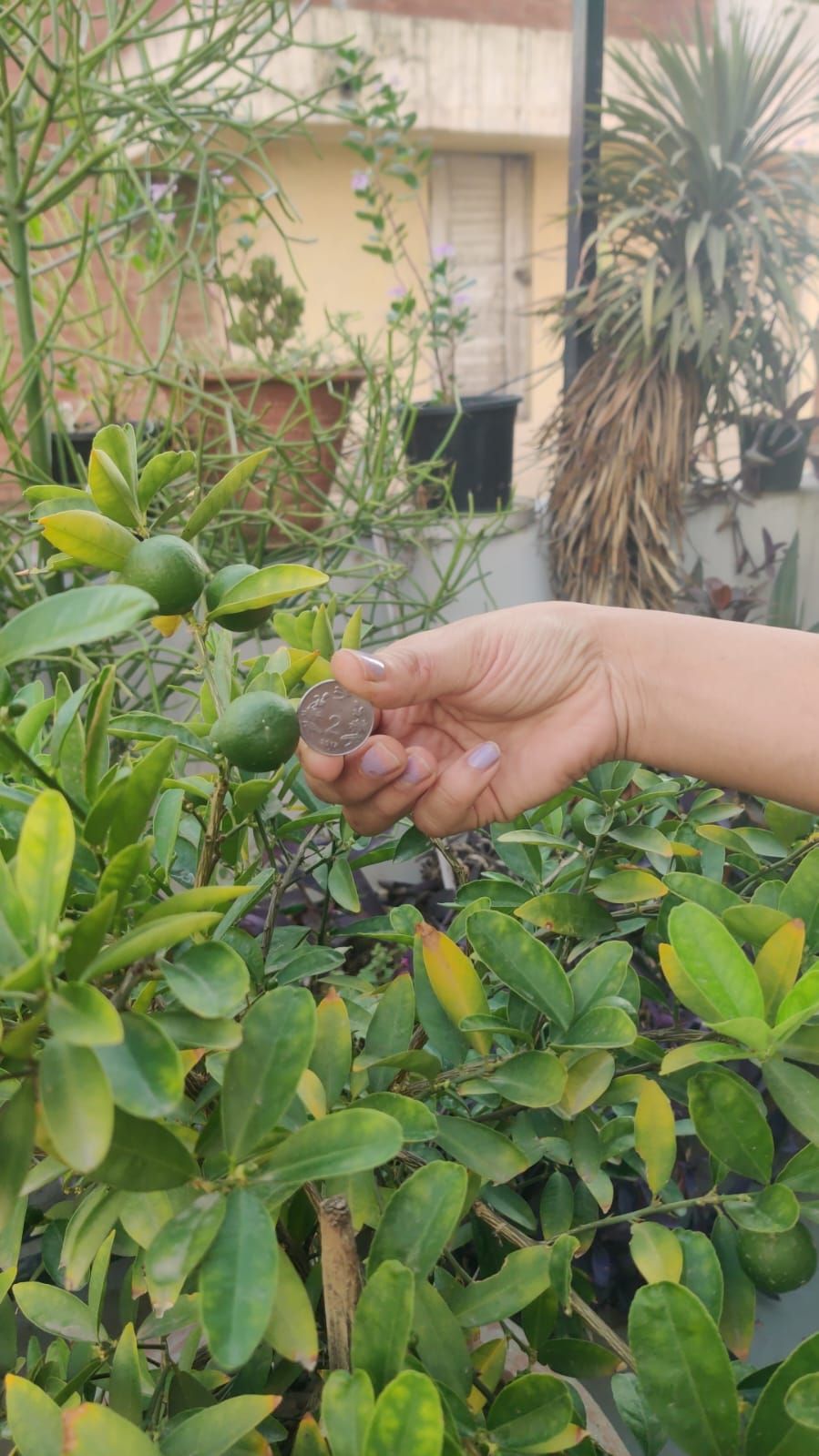
My plant’s leaves agree. Several have yellow patches or yellow edges with brown tips. Leaf yellowing has many possible causes (shortage of nutrients, salt build-up, root stress from watering), so I’m not diagnosing from a photo. But together with the feeding history, a hungry plant is the most likely story.
Cause 3: Heavy soil that waters unevenly
The soil in my pot looks like ordinary garden soil: hard clods on top, deep cracks when dry. In a pot, this kind of soil packs down over time. When I water, a lot of it runs down the cracks and the sides of the pot instead of soaking the roots.
The result is roots that swing between too dry and too wet, which is exactly the kind of stress that keeps fruit small (and can also cause fruit drop). My watering habit isn’t the real problem; the soil is making it uneven.
Cause 4: Maybe it’s just the variety
Here’s something to check before you blame yourself. Many plants sold in Indian nurseries as “lemon” are actually kagzi-type limes: round fruit, thin skin, very juicy, and naturally small. A big oval lemon is a different plant.
Mine has round fruit and fairly small leaves, which makes me suspect it’s a lime type. Even so, around 2.5–3 cm is on the small side, so the causes above still apply. If your fruits are round and thin-skinned, adjust your expectations a little: they’ll never be the size of a market lemon, but they can be much juicier and bigger than coin-sized.
The “12-masi” myth
Nurseries sell 12-masi plants as fruiting all year round. In practice, they flower in flushes, and in North India’s hot summers and cold winters, one main crop a year in a pot is quite normal. My plant gives almost everything in September–October, which fits that pattern exactly.
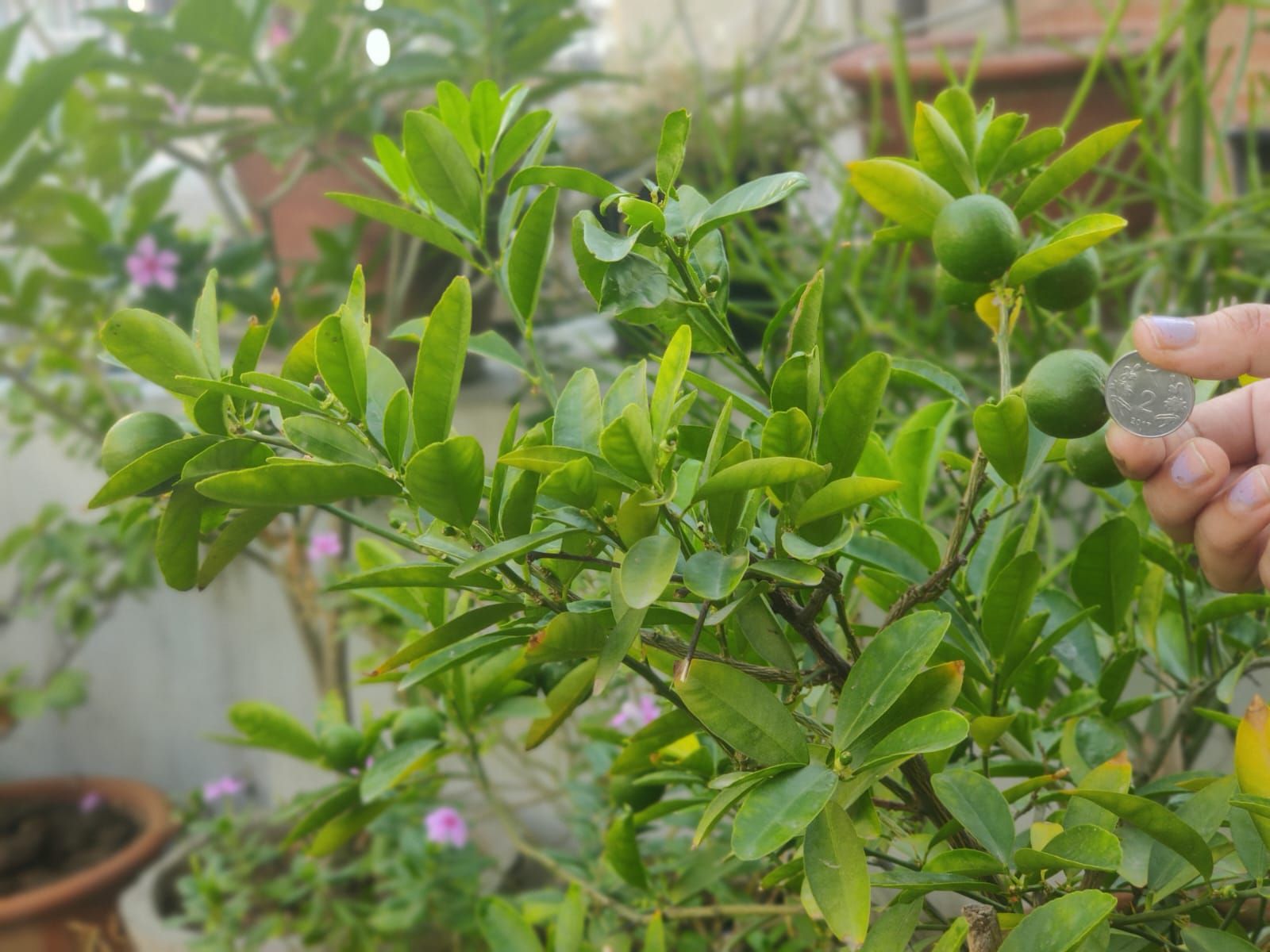
Interestingly, my plant is forming new buds right now in October (look closely between the leaves). Flowers that set just before a Punjab winter often drop, or give small fruit, because growth slows down in the cold. I’m going to watch these and report back.
Hacks I’m not using
- Epsom salt: only helps if the soil is truly short of magnesium. Adding it “just in case” can make other nutrients harder to absorb.
- Sugar water or fruit juice: plants make their own sugar from sunlight. Sugar in the soil mainly feeds fungus and ants.
- Burying banana peels: they do contain a little potassium, but release it very slowly. Not enough for a plant carrying dozens of fruits.
My plan, season by season
I’m changing one thing at a time and recording it, so next year I’ll know exactly what worked.
| When | What I’m doing |
|---|---|
| October–November | Let the current fruit finish. Water deeply when the top 2 inches are dry, until water drains out. Add a layer of mulch to keep moisture even. No heavy nitrogen (like urea) going into winter. |
| December–January | Rest period. Water less, no feeding. |
| February–March | The main fix. Move the plant to a bigger pot (20–24 inch) with a loose, well-draining mix (good soil, compost, and something coarse like sand or cocopeat). Start a balanced fruit-plant or citrus fertiliser that includes potassium and micronutrients, following the dose on the pack. |
| Spring flowering | Let the flowers set. When the fruits reach marble size, thin each cluster to one fruit and reduce the total load significantly on this young plant. |
| Monsoon | Make sure the pot drains freely. Light, regular feeding. |
I’ll update this article with results
Every change and every photo will be added here, with an “Updated” date at the top. Next season, I’ll compare the new lemons against the same ₹2 coin. If thinning and proper feeding work, you’ll see it here first.
Have a potted lemon with the same problem? Tell me about it. Your questions help shape the next guides.